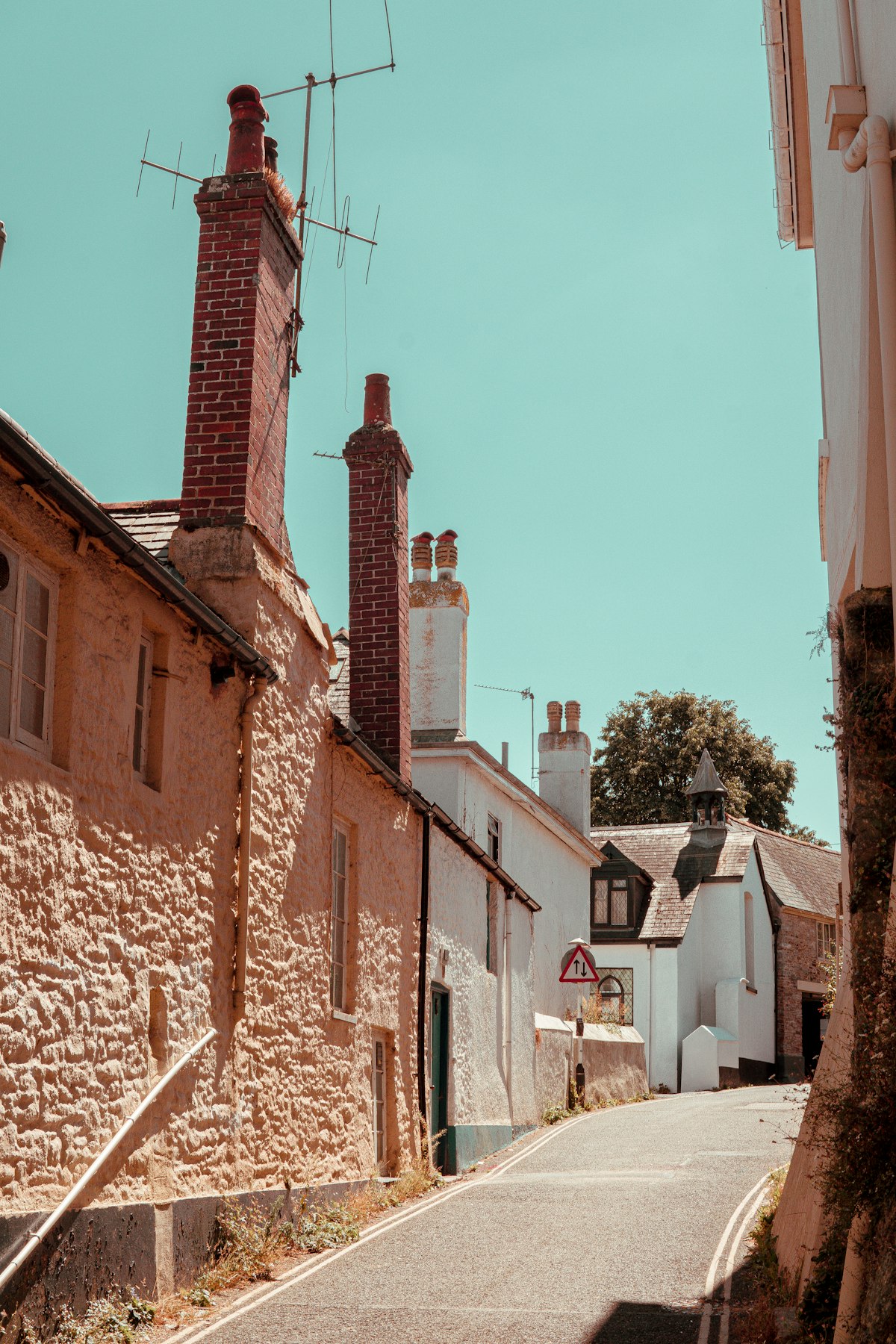
Daylight requirements in West Devon are governed by a planning framework that the borough shares with two neighbouring authorities. West Devon Borough Council is the local planning authority (LPA) for most of the borough, but it does not write its own standalone Local Plan. Instead, it works to the Plymouth and South West Devon Joint Local Plan, a single development plan prepared jointly with Plymouth City Council and South Hams District Council. If you are extending a home in Tavistock, building in Okehampton, or bringing forward a residential scheme anywhere outside the national park, the daylight and sunlight expectations that follow flow from this shared plan and its supporting guidance.
This article explains how that joint arrangement works, which adopted policies apply, and the specific daylight and sunlight tests West Devon uses when assessing the impact of development on neighbours and on future occupiers.
Daylight requirements in West Devon and the Joint Local Plan
The Plymouth and South West Devon Joint Local Plan (the JLP) was adopted by all three councils in March 2019 — South Hams District Council on 21 March 2019, and both Plymouth City Council and West Devon Borough Council on 26 March 2019. It covers the period 2014 to 2034. Rather than three separate plans, the three authorities chose a single plan with shared strategic and development management policies, while each remains the decision-maker for applications in its own area. So for a planning application in West Devon, the council still determines the application, but it does so against jointly adopted policies.
One important boundary point: a large part of eastern West Devon lies within Dartmoor National Park, and the Dartmoor National Park Authority is a separate local planning authority. Applications inside the national park are handled by the Park Authority under its own development plan, not by West Devon Borough Council. The guidance in this article applies to land in West Devon that sits outside the national park boundary — which includes the main towns of Tavistock and Okehampton.
Policy DEV1 – Protecting health and amenity
The cornerstone amenity policy in the JLP is Policy DEV1 (Protecting health and amenity). Clause DEV1.1 aims to ensure that new development provides for “satisfactory daylight, sunlight, outlook, privacy and the protection from noise, vibration and odour disturbance for both new and existing residents, workers and visitors.†In other words, daylight and sunlight are written into the plan as a named amenity consideration, and applicants are expected to demonstrate through the application process that these matters have been properly thought through.
Policies DEV10 and DEV20 – housing and design quality
Two further JLP policies routinely come into play. Policy DEV10 (Delivering high quality housing) deals with the standard of accommodation, including the expectation that principal habitable rooms receive adequate levels of natural daylight and that single-aspect arrangements are generally avoided. Policy DEV20 (Place shaping and the quality of the built environment) covers design quality more broadly, including how building heights and massing respond to their surroundings and avoid harmful overshadowing and overlooking. Read together, DEV1, DEV10 and DEV20 cover both the impact on neighbours and the living conditions of the people who will occupy the new homes.
How West Devon measures daylight and sunlight
The JLP policies are deliberately worded as objectives. The practical detail — the numbers and the geometry — sits in the Plymouth and South West Devon Joint Local Plan Supplementary Planning Document (the JLP SPD), adopted by West Devon Borough Council on 9 June 2020. Appendix 1 of the SPD, on residential extensions and alterations, sets out the tests planning officers actually apply.
The 45-degree and 25-degree guidelines
For daylight and sunlight, the SPD states that “extensions should not result in a significant loss of daylight or sunlight to habitable rooms of neighbouring properties, such as kitchens, living rooms or bedrooms,†and that proposals causing a harmful loss “will be refused.†To test this, the SPD relies on the 45-degree guideline. An imaginary 45-degree line is drawn in plan from a point in the window of the closest ground-floor habitable room of the neighbouring property, across the site of the proposed development. When that line is then elevated to an angle of 25 degrees above the horizontal, it shows the maximum width and depth an extension can reach without unreasonably obstructing light.
The SPD is precise about how the line is taken: for a single-storey extension it runs from the mid-point of the window; for a two-storey extension it is taken from the quarter point closest to the boundary. Extensions are “normally only considered acceptable if they do not cross the 45 degree line when elevated to 25 degrees.†Relaxation may be allowed for lightweight, transparent structures such as conservatories, where the orientation of the properties is favourable, where there is a difference in ground levels, or where a high boundary wall already exists between the two properties.
Separation, outlook and privacy distances
The SPD also sets out separation distances that protect light and outlook:
- Habitable room windows facing each other should be a minimum of 21 metres apart for two-storey development, increasing to 28 metres where one or more buildings are three storeys or where a drop in levels reduces privacy.
- The minimum distance between a main habitable room window and a blank wall should be at least 12 metres, increasing to at least 15 metres for three-storey development.
- Where there is a difference in ground levels, distances should be increased — normally by an extra 3 metres for every 2 metres of additional height.
These figures are not a substitute for a proper daylight and sunlight assessment, but they give a strong indication of when an extension or new building is likely to raise concerns.
Validation: BRE BR 209 and numerical targets for larger schemes
For larger applications, West Devon's local validation requirements go further and ask for technical evidence. The council's local list, prepared as the LPA in line with the Joint Local Plan, expects a quantitative and qualitative daylight and sunlight report following the methodology in the Building Research Establishment guide Site Layout Planning for Daylight and Sunlight: A Guide to Good Practice (BRE BR 209). The validation guidance references targets including a Vertical Sky Component of around 27 per cent and a minimum of 10 per cent winter probable sunlight hours for a main living-space window oriented within 90 degrees of south, with applicants asked to explain how light has been optimised where site constraints make these difficult to meet. The current edition of BR 209 (2022), alongside the British Standard BS EN 17037, is the recognised basis for these calculations.
Local context: Tavistock, Okehampton and a sensitive landscape
West Devon's two principal towns each raise their own daylight and sunlight questions. Tavistock is a former stannary town with a large conservation area and a dense historic core of stone buildings and narrow streets; here the SPD explicitly recognises that in areas with a medieval or tightly knit street pattern, expected levels of privacy and separation may reasonably be lower than in a modern suburb, and alternative design solutions such as obscured glazing or oriel windows may be appropriate. Okehampton, on the northern fringe of Dartmoor, has seen significant new housing growth, where the interaction between new estate layouts and existing dwellings makes the 45-degree and separation-distance tests particularly relevant.
Much of South Hams and parts of West Devon also sit within very sensitive landscapes, and the JLP requires the conservation and enhancement of those natural qualities. That landscape sensitivity can influence building heights and massing — and therefore overshadowing — in ways that a purely numerical daylight assessment will not capture on its own. Getting the daylight evidence right early helps avoid a refusal that compounds wider design and landscape concerns.
How Fortress Associates can help
Fortress Associates prepares daylight and sunlight assessments for sites across West Devon and the rest of the UK. Our daylight and sunlight report service produces reports to BRE BR 209 (2022) and BS EN 17037, set against the relevant Joint Local Plan policies, so your application arrives with the evidence West Devon Borough Council expects. We work to a 4–5 working day turnaround and ask for no advance payment. We also provide Building Regulations drawings where a scheme needs them. If your project lies in the neighbouring authority, see our guide to daylight requirements in South Hams, which shares the same Joint Local Plan. To discuss a project in Tavistock, Okehampton or elsewhere in the borough, get in touch.
Sources & further reading
Need help with a UK planning project?
Fixed-fee daylight reports and Building Regulations drawings — delivered in 4–5 working days. No advance payment.
Request a free quote